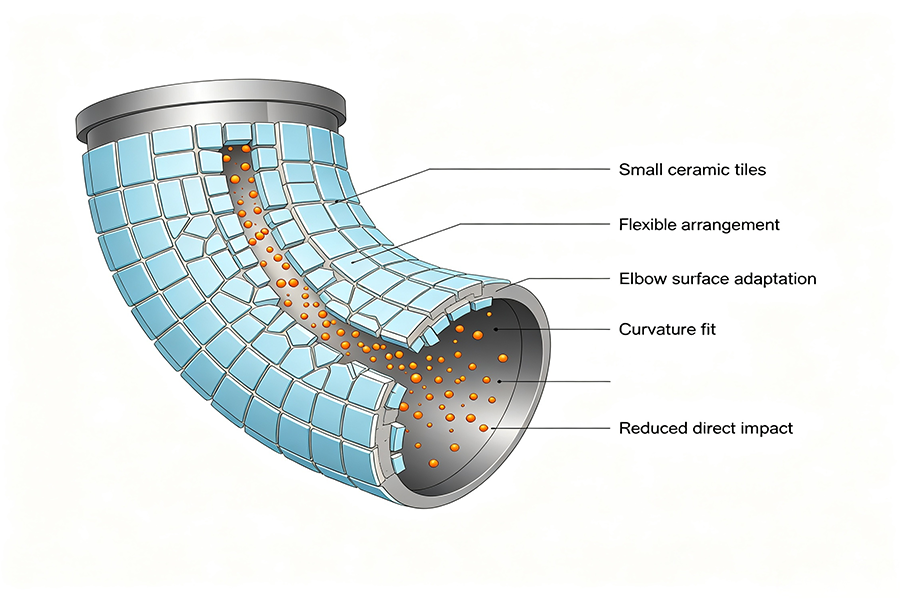
Different Ceramic Lining structures, including flat tile lining, mosaic ceramic lining, and ceramic ring lining, provide different advantages for various industrial applications. Selecting the correct arrangement method according to material characteristics, flow conditions, and wear mechanisms can significantly improve pipeline service life and reduce maintenance costs.
1 Why Ceramic Tile Arrangement Matters in Wear-resistant Pipeline Design
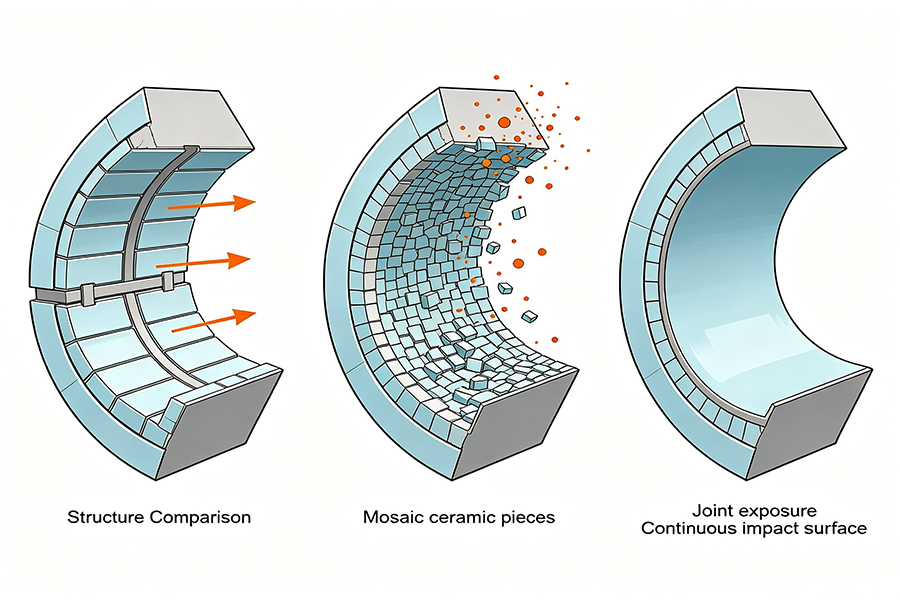
A wear-resistant Ceramic Pipeline is a complete engineering system composed of ceramic material, steel structure, bonding method, and internal lining arrangement. Even when using the same Alumina ceramic grade, different tile layouts may produce completely different operating results.
The Role of Ceramic Lining Structure
The performance of ceramic-lined pipes depends on multiple factors:
| DESIGN FACTOR | INFLUENCE ON PIPELINE PERFORMANCE |
|---|---|
| Alumina Content | Determines hardness and wear resistance |
| Ceramic Thickness | Determines wear allowance and service life |
| Tile Arrangement | Affects stress distribution and impact resistance |
| Joint Design | Influences sealing performance and structural stability |
| Installation Method | Affects bonding reliability |
In industrial applications, ceramic layout design must match actual operating conditions rather than simply selecting the thickest or hardest ceramic material.
How Ceramic Arrangement Influences Wear Performance
When abrasive particles impact the ceramic lining, stress is transferred through the ceramic structure. The arrangement method determines how these stresses are distributed and absorbed.
Material Impact


↓


Ceramic Surface


↓


Stress Transfer


↓


Ceramic Structure Response


↓


Pipeline Service Life
A well-designed ceramic arrangement can:
- Reduce local stress concentration.
- Improve impact resistance.
- Reduce ceramic cracking risk.
- Extend pipeline operating life.
Relationship Between Ceramic Layout and Service Life
| LAYOUT FACTOR | EFFECT ON PIPELINE LIFE |
|---|---|
| Tile Size | Influences impact resistance and stress distribution |
| Joint Arrangement | Affects particle penetration and structural stability |
| Surface Coverage | Determines wear protection consistency |
| Installation Accuracy | Influences bonding strength and durability |
Common Ceramic Lining Arrangement Methods
Industrial ceramic-lined pipelines mainly use three structural arrangements:
| ARRANGEMENT TYPE | MAIN CHARACTERISTICS | TYPICAL APPLICATIONS |
|---|---|---|
| flat ceramic tile lining | Large ceramic plates arranged on pipe surface | Straight pipes and large diameter pipelines |
| Mosaic Ceramic Lining | Small ceramic tiles arranged flexibly | Elbows and complex geometry pipelines |
| Ceramic Ring Lining | Integrated ceramic ring structure | High wear and high velocity applications |
2 Flat Ceramic Tile Lining: Structure, Advantages and Limitations
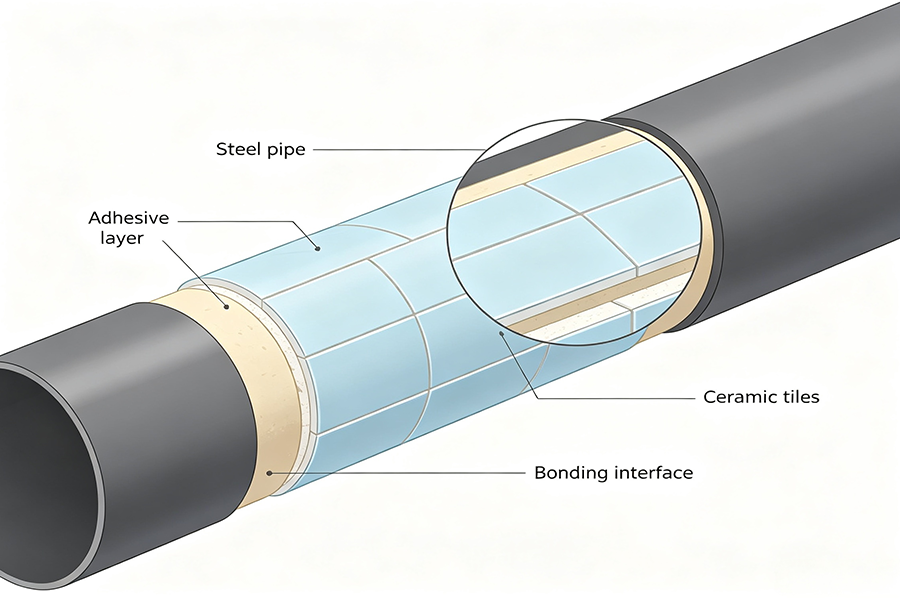
Flat ceramic tile lining is one of the most common wear-resistant pipeline protection methods. It uses relatively large ceramic plates installed on the inner surface of steel pipes to create a continuous abrasion-resistant layer.
What Is Flat Tile Ceramic Lining?
Flat tile ceramic lining refers to a structure where rectangular or square alumina ceramic tiles are arranged according to the internal surface geometry of the pipeline. The tiles are fixed using adhesive bonding, mechanical fastening, or composite manufacturing methods.
Flat Ceramic Tile Structure
Advantages of Flat Tile Arrangement
1. High Surface Coverage
Large ceramic tiles provide extensive surface protection with fewer joints compared with small ceramic pieces.
Benefits include:
- Reduced exposed bonding areas.
- More continuous wear protection.
- Improved surface consistency.
2. Good Wear Resistance
Flat ceramic tiles are widely used in applications where abrasive materials move through relatively straight pipeline sections.
Typical applications include:
- Mining material transportation.
- Cement raw material conveying.
- Coal powder pipelines.
- Industrial powder transfer systems.
3. Easy Thickness Optimization
Because flat tiles are available in various thickness options, engineers can select suitable wear allowance according to operating conditions.
| OPERATING CONDITION | RECOMMENDED CONSIDERATION |
|---|---|
| Low Abrasion | Standard ceramic thickness |
| Medium Abrasion | Increased ceramic thickness |
| Severe Abrasion | Heavy-duty ceramic structure |
Limitations of Flat Ceramic Tile Structure
1. Stress Concentration
Large ceramic pieces may experience higher internal stress under severe impact conditions.
Potential issues include:
- Impact stress accumulation.
- Thermal expansion stress.
- Ceramic cracking risk.
2. Installation Requirements
Flat tile lining requires accurate installation to ensure:
- Uniform ceramic surface.
- Reliable bonding.
- Proper joint control.
3. Limited Flexibility
Due to their larger size, flat ceramic tiles are less suitable for:
- Small-radius elbows.
- Complex curved surfaces.
- Irregular pipeline structures.
Suitable Applications of Flat Ceramic Tile Lining
| APPLICATION | REASON |
|---|---|
| Straight Conveyor Pipeline | Stable flow and uniform abrasion |
| Large Diameter Pipe | Easy installation and high coverage |
| Medium Wear Conditions | Good balance between performance and cost |
3 Mosaic Ceramic Tile Lining: Flexible Protection for Complex Pipelines
Mosaic ceramic lining uses many small ceramic pieces arranged closely together. Compared with flat tile structures, mosaic designs provide greater flexibility and are suitable for pipelines with complex shapes.
What Is Mosaic Ceramic Lining?